


Laboratories
For availability, please contact laboratories@kingsbay.no. Please note that all bookings are made through RiS.
Marine Laboratory general information
The Marine Laboratory was officially opened on 1 June 2005. Located at the beach close to the harbour I Ny-Ålesund, it is the northernmost experimental laboratory supporting research in marine ecology, physiology, biochemistry, as well as physical sciences such as oceanography, marine geology, and ice physics.
Uniquely among the Kings Bay AS laboratory facilities, seawater is drawn from an intake at approximately 70 m depth, around 700 m offshore, and pumped directly into the building. The water is filtered (100 μm and 10 μm) and UV-treated before being supplied to experimental tanks of varying sizes, enabling controlled experimental set-ups under near-natural conditions while maintaining a comfortable working environment.
The Marine Laboratory also includes smaller rooms where system-controlled environmental variables, such as air and seawater temperature, can be precisely regulated and monitored.
In addition, the facility is equipped with dedicated laboratory space for a range of purposes, including fume hoods for safe handling and use of chemicals, microscopes, drying cabinets, MilliQ water systems, a biosafety cabinet, and other general laboratory equipment. A full overview of available equipment and instruments, including their availability, can be found in the equipment list.
The laboratory space, experimental rooms, and equipment are available for rent on a commercial basis and are open to all researchers under the same conditions.
All laboratories are connected to the seawater system. Users must confirm system availability with Kings Bay Laboratories staff prior to use.
Contact information: laboratories@kingsbay.no.
Tox-free lab (9.1 m2)
The toxic-free laboratory (Tox-free lab) is a controlled, contamination-sensitive environment designed for work where the use of hazardous or toxic chemicals is not permitted.
The laboratory is equipped with a combined freezer and cooler and a Biosafety cabinet Class II (90 cm wide), dedicated bench space and cabinets, providing clean and safe working conditions for handling samples and conducting procedures that require a high level of contamination control.
This lab is particularly suitable for sensitive biological, environmental, and analytical work where avoidance of toxic substances and minimisation of contamination are required.
Dry lab (8.8 m2)
The Dry lab is designed for general dry laboratory work and includes a range of microscopes suitable for both routine and more detailed analytical applications. This includes stereomicroscopes for low-magnification inspection of samples, compound light microscopes for higher-magnification work, and additional specialised microscopy units depending on availability.
The facility provides dedicated bench space and standard laboratory infrastructure, supporting a wide range of dry experimental procedures and sample handling. It is particularly well suited for microscopy-based analyses, small-scale sample preparation, and other dry laboratory work that does not require wet-chemistry or high-containment facilities.
The facility also has a weighing station with a fixed analytical balance (10 μg to max. 220 g) for accurate weighing and a spectrophotometer.
Wet lab (14.6 m2)
The Wet lab is a fully equipped space designed for general wet laboratory work and sample processing. It includes bench space, seawater supply, chemical storage facilities, and a fume hood.
The laboratory is equipped with a stainless-steel dissection bench and large sinks (including sediment trap options). The space supports a wide range of wet experimental procedures, including sample preparation, dissection, and chemical handling.
Aquarium lab (29.6 m2)
The Aquarium lab is a large wet laboratory designed for experimental work involving aquatic organisms and seawater-based systems. It provides extensive bench space for experimental setups such as smaller aquaria or respiration chambers, or other custom experimental installations of a smaller size.
The facility includes seawater supply, sinks, standard laboratory benches, and storage cabinets. It is also equipped with a fume hood with chemical storage cabinets.
Due to its multifunctional use, the workspace can be organised into separate working areas, for example a wet and a dry side or dedicated bench areas for different groups or activities.
Eco-tox lab (11.2 m2)
The Eco-tox laboratory is a wet laboratory designed specifically for contamination studies. Such experimental work is not permitted in other parts of the Marine Laboratory for safety reasons.
The laboratory is equipped with a fume hood with chemical storage cabinets, as well as standard laboratory benches. It has seawater supply and is designed to support controlled experimental work involving chemical exposure and contamination studies.
Basement lab 1 (east)
Standard wet lab space with bench space and cabinets for storing of equipment. The laboratory has saltwater outlet for experimental set-up with raw, unfiltered seawater. The laboratory is also equipped with a fume hood for work with chemicals and a freezer.
Basement lab 2 (west)
Standard wet lab space with bench space and cabinets for storing of equipment. The laboratory has saltwater outlet for experimental set-up with raw, unfiltered seawater. The laboratory has direct access to the outdoor platform.
Temperature-controlled rooms
The facility includes a range of temperature-controlled experimental rooms to support laboratory and environmental research. The rooms provide flexible conditions for a variety of experimental setups needs. Each room can be set to specific temperature ranges to meet experimental requirements, and they are suitable for both short- and long-term (max. 3 months consecutive) use depending on project needs.
The temperature-controlled rooms can be equipped with shelves (max. 50 kg) and tables which can be arranged depending on your needs. They do not have any fixed installations inside.
Setups must be agreed with Kings Bay Laboratory staff and, where relevant, supported by drawings, descriptions, and/or equipment lists. Use of chemicals is not permitted in temperature rooms.
The rooms cool down rapidly, normally the set temperature is reached within 30 minutes. However, it is recommended waiting for one hour to ensure adequate temperature stabilization of the room before using the facilities. The temperature-controlled rooms are designed to maintain stable conditions once set, supporting reproducible experimental work.
The temperature-controlled rooms are operated exclusively via a central control interface located in the Marine Laboratory Office. The steering system is provided by Siemens and is used to monitor and adjust temperature settings across the different cold rooms, refrigerated rooms, and freezer facilities to ensure stable and reproducible experimental conditions. Deviations in parameter settings will alarm the Kings Bay Watchman service.
Access to the temperature-controlled rooms is restricted to authorised users only, the rooms can be locked if sensitive experiments are running. Temperature settings and other system parameters are adjusted exclusively by Kings Bay staff in accordance with approved requests. Any changes, support requests, or questions must be directed to Kings Bay Laboratory staff.
Contact information: laboratories@kingsbay.no.
Safety in the temperature-controlled rooms
The cold temperatures in the rooms require the users to dress accordingly. Users should not be working alone and should check regularly with colleagues when working in the rooms.
In addition to be dressed warm enough users must follow the same guidelines as in other laboratories concerning the use of personal protective equipment.
Never close the door with a key or other means before checking that the room is not occupied by other people.
Never use oxygen consuming or exhaust producing devices in the facilities. The ventilation in the rooms is not sufficient to ensure safe breathing conditions during such activities.
Temperature-controlled room 1 (2.9 m²)
- Temperature range: 0°C to +15°C
- Defrost cycle: 5 minute every 15 minute
- Seawater outlets (PN10 DN 10/15):
- System 314.04: Ambient
- System 314.06: Cold
- Low-pressure compressed air supply (DN25/PN16)
- Two electrical outlets (wall-mounted)
- Floor drain
Possible setups include, but are not limited to, tables, shelving, experimental systems, and small tanks/aquariums.
Temperature-controlled room 2 (2.7 m²)
- Temperature range: 0°C to +15°C
- Defrost cycle: 5 minute every 15 minute
- Seawater outlets (PN10 DN 10/15):
- System 314.04: Ambient
- System 314.06: Cold
- Low-pressure compressed air supply (DN25/PN16)
- Two electrical outlets (wall-mounted)
- Floor drain
Possible setups include, but are not limited to, tables, shelving, experimental systems, and small tanks/aquariums.
Temperature-controlled room 3 (8.5 m²)
- Temperature range: 0°C to +15°C
- Defrost cycle: 5 minute every 45 minute
- Seawater outlets (PN10 DN 10/15):
- System 314.04: Ambient
- System 314.06: Cold
- Low-pressure compressed air supply (DN25/PN16)
- High-pressure compressed air supply (1MPa, 150 PSI)
- Six electrical outlets (wall-mounted)
- Four electrical outlets (ceiling-mounted)
- Two Ethernet ports
- Floor drain
Possible setups include, but are not limited to, tables, shelving, experimental systems, and small tanks/aquariums.
Temperature-controlled room 4 (5.8 m²)
- Temperature range: 0°C to +15°C
- Defrost cycle: 5 minute every 30 minute
- Seawater outlets (PN10 DN 10/15):
- System 314.04: Ambient
- System 314.06: Cold
- Low-pressure compressed air supply (DN25/PN16)
- Two electrical outlets (wall-mounted)
- Four Ethernet ports
- Floor drain
Possible setups include, but are not limited to, tables, shelving, experimental systems, and small tanks/aquariums.
Seawater system
The Marine Laboratory is equipped with integrated seawater and freshwater supply systems supporting a wide range of marine and environmental research applications. The freshwater supply is not operational.
Seawater is pumped from Kongsfjorden through an intake located approximately 700 m offshore at a depth of approximately 80 m. Ambient seawater is supplied to the facility and can be heated or cooled relative to the ambient temperature within the operational range of the system to support controlled experimental conditions. Maximum temperature of the seawater treatment is 15°C, whereas minimum temperature is 0°C.
Before distribution within the facility, all seawater passes through a treatment system consisting of a 100 µm coarse filter, a 10 µm fine filter to remove organic or inorganic particles that can contaminate or clog the systems. After filtration the water is subjected to UV treatment to kill and eliminate microorganisms. All seawater is vacuum aerated to remove saturation of nitrogen. The intake filtration, UV treatment and aeration cannot be bypassed in the second-floor tank rooms and laboratories. Intake filtration and vacuum aeration are bypassed in the basement labs were raw, unfiltered water can be supplied directly.
The seawater system has a delivery capacity of approximately 9-59 L/min, depending on the water quality thus system used, and temperature settings.
The seawater system can supply 4 different water qualities (temperatures) in addition to ambient water. Water can be distributed to laboratories, experimental tank rooms and temperature-controlled rooms.
From the main reservoir tank (system 314.01) the seawater is distributed to 5 different systems, one of which is ambient. 4 systems can be adjusted according to set temperatures relative to the ambient system.
|
System |
Quality |
Flow (L/s) |
Flow (L/min) |
|
314.01 |
|
1.75 – 3.75 |
|
|
314.02 |
Ambient to 15°C |
0.28 |
16.67 |
|
314.03 |
Ambient to 15°C |
0.15 |
9.29 |
|
314.04 |
Ambient (raw water) |
0.98 |
59.09 |
|
314.05 |
0°C to 15°C |
0.34 |
20.31 |
|
314.06 |
0°C to ambient |
0.57 |
34.21 |
The seawater system includes monitoring and alarm functions and operates as a standalone installation not connected to any external network.
All setups must be arranged in consultation with Kings Bay Laboratory staff and, where relevant, supported by drawings, descriptions, and/or equipment lists. Requests for modifications, technical support, or further information should be directed to Kings Bay Laboratory staff at laboratories@kingsbay.no.
Water Tank Rooms
Dedicated water tank rooms are available for experimental work requiring controlled aquatic conditions. The facilities support a wide range of marine research applications, including incubation experiments, and environmental simulation studies.
A centralised distribution system supplies seawater throughout the tank facilities. System parameters, including temperature, are adjusted exclusively by Kings Bay laboratory staff in accordance with approved requests.
The tank rooms accommodate a range of tank sizes, including smaller-scale experimental tanks (ca. 216 L) as well as larger tanks (ca. 600 L), depending on research requirements. For other tank sizes, please contact Kings Bay Laboratory staff.
The tanks are designed as flow-through systems with bottom drainage and are not intended to function as sealed water storage tanks. Continuous water supply is required during normal operation to compensate for continuous drainage. If the water supply is discontinued after the tanks have been filled, the water will drain through the outlet, and the tanks will not retain the water.
Seawater can be supplied at ambient temperature or conditioned within the ranges of colder than or warmer than ambient seawater. Seawater temperature can be set to approximately 0°C to 15°C.
are available for aeration, experimental support systems, and specialised equipment where required. There is also oxygen outlet present in all rooms. Oxygen gas would then need to be ordered in advance for the project, if oxygenation is required.
All experimental setups must be agreed upon with Kings Bay Laboratory staff and, where relevant, supported by drawings, descriptions, and/or equipment lists. Experimental installations must be compatible with facility infrastructure and approved prior to installation. The use of chemicals is not permitted in tank rooms.
In addition, Individual Water Tanks can be installed temporary in Basement Lab West, Basement Lab East and on the outside Platform. The Wet Lab and Aquarium Lab can only host smaller Aquariums or mesocosms.
Safety in the Water Tank Rooms
Whether working in the water tank rooms requires additional precautionary measurements depends on your risk assessment.
Ensure that the hose is well attached to the seawater-outlet so that there will be no leaks; use either a tight fitting hose or attach a hose clamp to ensure a good seal.
Tank room 1 (118/110) (10.5 m² with 5 × ~200 L tanks)
Suitable for continuous-flow experimental setups with five approximately 216 L tanks. The room provides system seawater for tanks, freshwater supply for cleaning purposes only, low-pressure and high-pressure compressed air outlets, electrical outlets for experimental equipment, and floor drainage.
Tank room 2 (111/112) (13 m² with 10 × ~200 L tanks)
Standard experimental tank room suitable for continuous-flow experimental setups equipped with ten approximately 216 L tanks, providing increased capacity for replicated experiments. The room provides system seawater for tanks, freshwater supply for cleaning purposes only, low-pressure and high-pressure compressed air outlets, electrical outlets for experimental equipment, and floor drainage.
Tank room 3 (113) (5.9 m² with a rack based tank-system 3 x 100 L tanks)
Rack-based (shelved) tank system designed for small-scale continuous-flow experiments and incubation studies. Smaller aquaria can be placed on shelves to enable flexible experimental configurations and separation of treatments. The room provides system seawater for tanks, freshwater supply for cleaning purposes only, low-pressure and high-pressure compressed air outlets, electrical outlets for experimental equipment, and floor drainage.
Tank room 4 (116) (15.8 m² with 6 × 600 L tanks)
Large-volume tank room equipped with six approximately 600 L tanks and designed for mesocosm-scale experiments. Suitable for long-term studies, and experiments requiring more naturalistic or in situ-like conditions. The room provides system seawater for tanks, freshwater supply for cleaning purposes only, low-pressure and high-pressure compressed air outlets, electrical outlets for experimental equipment, and floor drainage.
Seawater access in laboratories
Seawater is available throughout the Marine Laboratory and is supplied to all laboratories, the Basement laboratories, as well as the temperature-controlled rooms and outside.
Seawater access can be set up and configured in most rooms depending on experimental needs. All laboratories have outlets connected to the central ambient seawater supply and can be adjusted to support different types of laboratory setups.
Use of seawater and any configurations must be arranged in cooperation with Kings Bay Laboratory staff.
Dive locker and Decompression Chamber
Dive Locker
The Dive locker consists of a toilet and a warm relax area for planning, office desk space and a wet area for dive equipment storage, drying, cleaning and maintenance of diving equipment.
The facility includes storage areas with hooks and shelves for equipment, simple shower facilities, toilet, large sinks, and an area for drying gloves, shoes, suits and other diving gear. A filling panel with outlets for filling diving tanks at both 200 bar and 300 bar is available near the entrance. It can be connected to a high-pressure hose to a compressor.
Kings Bay do not provide a compressor for filling tanks; it is expected that the diving group need to bring this themselves. A storage unit or hut with power sockets are installed outside, in near proximity to the inside filling panel.
Kings Bay does not provide compressed air tanks, which means that the diving group must bring their own tanks to Ny-Ålesund.
A cleaning tank, and a freshwater hose are located outside the dive locker during the summer months to rinse equipment.
Access and use must be coordinated with Kings Bay Laboratory staff and relevant diving groups.
Decompression chamber
A decompression chamber of the model Norwegian Underwater Technology (NUT) Twin lock decompression chamber is available at the Marine Laboratory, this is the only decompression chamber on Svalbard.
The chamber is maintained by Kings Bay AS and kept in operational condition. During use, Kings Bay personnel may assist with operation and support in cooperation with relevant health professionals. However, the diving group is responsible for dive safety, planning, communication, and compliance with applicable diving safety regulations, including appointment of a responsible contact person. Chamber operation must be conducted by the dive team itself by a qualified operator. At least one diver must be available to assist an injured diver in the chamber.
Use of the chamber may be arranged as part of a lease agreement for specific periods and locations. Additional costs may apply for personnel assistance and medical consumables if the chamber is activated during operations.
All use must be coordinated in advance with Kings Bay Laboratories.
Outdoor platform
The Outdoor platform can be used as an external working area for marine and environmental research and experimental activities. It is suitable for experimental setups in larger tanks, using seawater pumped directly from the water inlet at 80 meters depth.
The platform and the connecting beach can support work involving seawater, organisms, and equipment that benefits from direct access to the marine environment. It can also be used for handling samples, temporary storage, rinsing, transfer of samples between field and laboratory, and preparation of field equipment, as well as short-term deployment of experimental systems.
The area is exposed to weather and wind and is therefore suitable for equipment and setups designed to operate under outdoor conditions (natural light).
Use and setup must be coordinated with Kings Bay Laboratory staff.
Fridges and freezers
There are limited capacity for storage of samples at, +4 degrees, -20 degrees, -80 degrees. Cold storage facilities are primarily intended for use during your stay in Ny-Ålesund and are not designed for long-term storage. Use of standard cold storage is included in the laboratory rental.
If storage beyond the project period is required, this may be arranged upon request and is subject to agreement with Kings Bay Laboratory staff. Such arrangements will depend on available capacity and project needs and will be subject to additional billing.
Walk-in fridge (4 °C)
Cold-storage (4 °C) facility for sample storage. All boxes stored in the fridge must be clearly labelled with RIS ID, name, content and date of storage period.
Walk-in freezer (-20 °C)
Cold-storage (-20 °C) facility for sample storage. All samples stored in the freezer must be clearly labelled with RIS ID, name, content and date of storage period.
Additional -20 °C freezer capacity is available in external facilities outside the Marine Laboratory for larger sample volumes or when longer-term storage is required.
-80°C freezers
-80 °C freezers are available for sample storage and are primarily intended for short-term use. All samples stored in the freezer must be clearly labelled with RIS ID, name, content and date of storage period.
Washroom
The washroom provides facilities for cleaning, sterilisation, and basic laboratory support services. It includes an autoclave, ice machine, washing machine, and dishwasher. Milli-Q systems for ultrapure and pure water are also available.
The area is used for cleaning laboratory equipment, sterilising materials, producing ice, and supporting general laboratory workflows.
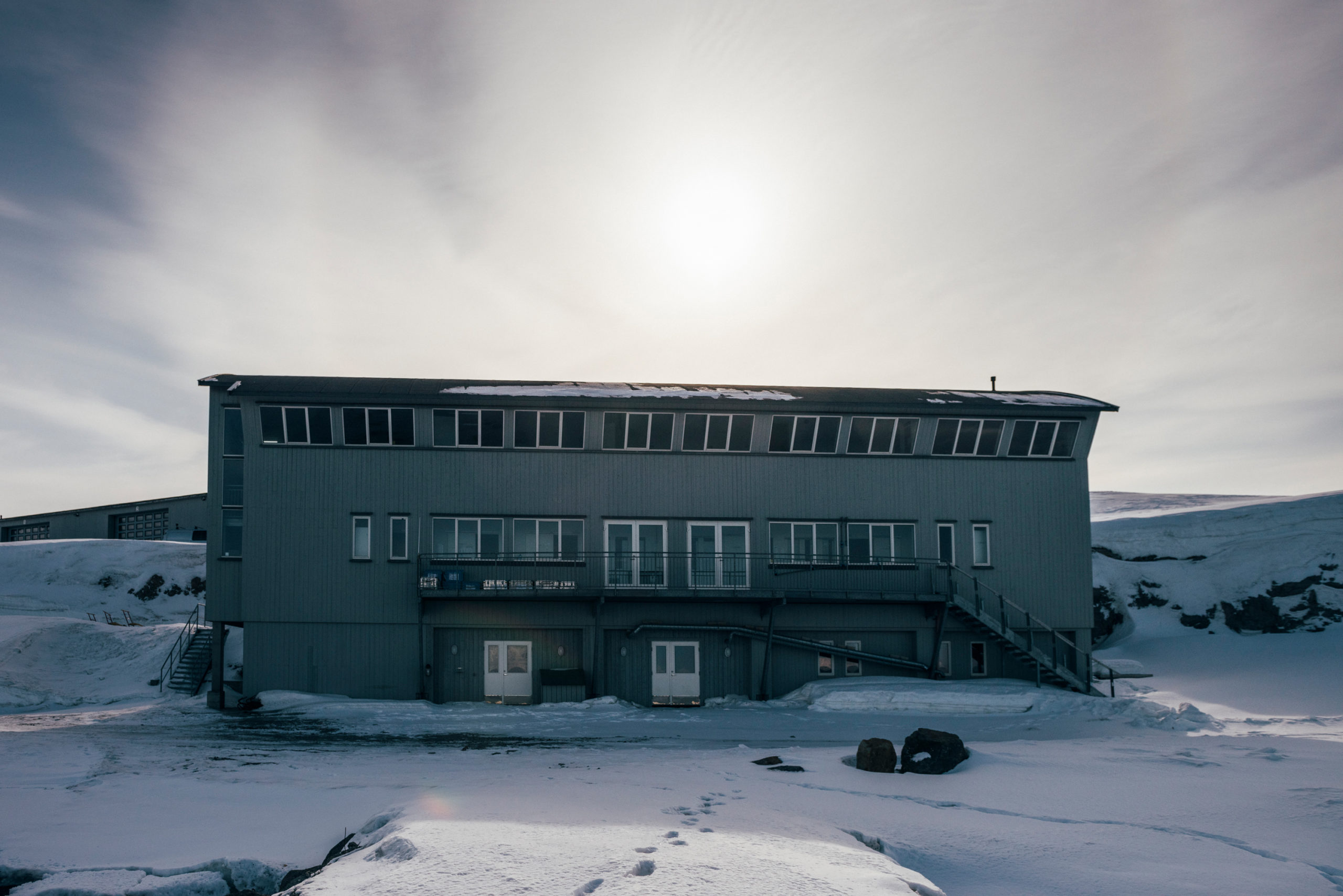
The Marine Laboratory

Research Vessel Teisten

The Terresterial Laboratory
I


Terms & Conditions
CHEMICAL & GAS ORDER
Chemical Orders
All chemical orders need to be placed well in advance of planned use. Kings Bay cannot guarantee that chemicals will arrive on time and is not held responsible for items lost or delayed during shipment. Please use this form to specify your chemical and gas order.
You will find a more detailed description of the ordering process and related questions as e.g. substitution in the document “02 Working with hazardous substances guidelines and regulations for the work with chemicals, gases, and radioactive isotopes”.
Gas Orders
Except for medical oxygen, all gas will be shipped by boat. Boat shipments arrive approximately at least every 8–10 weeks. Therefore, please plan accordingly and place orders early. Usually an order should be placed at the latest two weeks before the boat, M/S Norbjørn, leaves Tromsø. Please be aware, that gas bottles will be subject to a daily rent.
Like for chemicals, the gas order is placed through RiS. We need the following information:
- Type of gas
- Type of connection (e.g. click-on or industrial)
- Type of regulator needed (in case you do not bring your own regulator)
- Amount, e.g. 4 x 5 l
- Type of bottle (in case you have preferences)
Examples: Balloon Helium 200 bar, 4 x 50 l OR Propane, Household, Steel, 11 kg
Ny-Ålesund Research Station
Detailed information about the research activities in Ny-Ålesund, about how to plan and execute a research project here, and a comprehensive description of the research infrastructure available to researchers is provided on the web site for Ny-Ålesund Research Station.